

What is Biaxial Geogrid? A Comprehensive Guide
Biaxial geogrid is one of the most widely used geosynthetic materials in modern civil engineering and infrastructure construction. Designed to reinforce weak soils and improve load distribution, it plays a critical role in road construction, railway foundations, retaining walls, working platforms, and other ground stabilization applications.
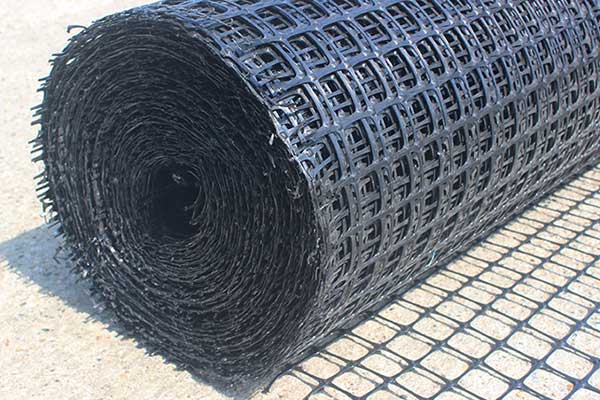
What is a Biaxial Geogrid?
A biaxial geogrid is a polymer-based geosynthetic reinforcement material manufactured with an open grid structure. It is engineered to provide high tensile strength in both the longitudinal and transverse directions, allowing it to distribute loads evenly across two axes.
Unlike uniaxial geogrids, which are strong in only one direction, biaxial geogrids are specifically designed for applications where loads act from multiple directions. This makes them ideal for stabilizing aggregate layers and reinforcing subgrades under roads, parking lots, railways, and industrial yards.
How is Biaxial Geogrid Manufactured?
Most biaxial geogrids are produced from high-quality polypropylene (PP), although some products are also made from high-density polyethylene (HDPE). The manufacturing process typically involves:
- Extruding a polymer sheet
- Punching a uniform pattern of apertures
- Stretching the sheet in both longitudinal and transverse directions
- Forming a monolithic grid structure with integral junctions
This biaxial stretching process aligns the polymer molecules in two directions, giving the geogrid excellent tensile strength, dimensional stability, and long-term durability.
How Does Biaxial Geogrid Work?
Biaxial geogrid reinforces soil through a mechanism known as aggregate interlock. When aggregate is placed and compacted over the geogrid, the particles lock into the grid apertures.
This interlocking action:
- Restricts lateral movement of aggregate
- Improves load distribution
- Increases bearing capacity
- Reduces rutting and settlement
- Enhances overall structural stability
The result is a reinforced composite layer that performs significantly better than unreinforced soil or aggregate alone.
Key Benefits of Biaxial Geogrid
1. Improved Load Distribution
Biaxial geogrid spreads applied loads over a wider area, reducing stress on weak subgrades.
2. Increased Bearing Capacity
It enhances the load-bearing performance of soil, making weak ground suitable for construction.
3. Reduced Aggregate Thickness
By improving structural efficiency, biaxial geogrid can reduce the required thickness of base materials, lowering construction costs.
4. Extended Pavement Life
It minimizes rutting, cracking, and deformation, significantly extending the service life of pavements.
5. Faster Installation
Lightweight and easy to handle, biaxial geogrid allows for quick and efficient installation on-site.
6. Cost Savings
Reduced material usage, less excavation, and lower maintenance requirements lead to substantial long-term savings.
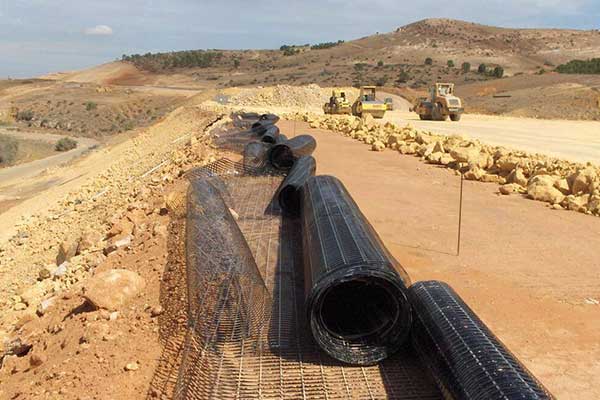
Common Applications of Biaxial Geogrid
Biaxial geogrids are used in a wide range of civil engineering and construction projects, including:
- Road base stabilization
- Highway and pavement reinforcement
- Railway track support
- Airport runways and taxiways
- Parking lots and industrial yards
- Working platforms for heavy equipment
- Temporary access roads
- Embankment reinforcement
- Foundation stabilization
- Landfill construction
- Port and container yard development
Biaxial Geogrid vs. Uniaxial Geogrid
While both products are used for soil reinforcement, their applications differ based on load direction.
| Feature | Biaxial Geogrid | Uniaxial Geogrid |
|---|---|---|
| Strength | Two directions | One direction |
| Primary Use | Base stabilization | Retaining walls and slopes |
| Load Distribution | Multidirectional | Directional |
| Typical Material | PP or HDPE | HDPE or PET |
In general, biaxial geogrid is best suited for pavement and subgrade stabilization, while uniaxial geogrid is preferred for reinforced soil walls and steep slopes.
Important Technical Properties
When selecting a biaxial geogrid, key performance parameters include:
- Tensile strength (MD and CD)
- Junction efficiency
- Aperture size
- Tensile modulus
- Flexural rigidity
- Creep resistance
- Chemical resistance
- UV resistance
- Durability under installation damage
These properties determine the geogrid’s performance in specific soil and loading conditions.
Why Choose Biaxial Geogrid for Soil Reinforcement?
Biaxial geogrid is a proven and reliable solution for improving the performance of weak soils and aggregate layers. Its ability to enhance load distribution, reduce deformation, and extend infrastructure lifespan makes it an indispensable material in modern civil engineering.
Whether you are constructing roads, railways, parking lots, or industrial platforms, biaxial geogrid provides an efficient, durable, and cost-effective reinforcement solution.
Installation Guidelines
Proper installation is essential for optimal performance. The typical installation process includes:
- Prepare and level the subgrade
- Roll out the biaxial geogrid over the prepared surface
- Overlap adjacent rolls according to design specifications
- Secure the geogrid if necessary
- Place aggregate fill directly over the geogrid
- Compact the aggregate to achieve proper interlock
Following manufacturer recommendations and engineering specifications ensures maximum reinforcement benefits.
Industries That Use Biaxial Geogrid
Biaxial geogrid is widely used across multiple industries, including:
- Highway construction
- Railway engineering
- Mining operations
- Oil and gas infrastructure
- Port construction
- Land development
- Renewable energy projects
- Industrial facility construction
- Municipal infrastructure
Final Thoughts
Biaxial geogrid is a highly effective geosynthetic solution for soil stabilization and ground reinforcement. With its ability to provide tensile strength in two directions, it significantly improves bearing capacity, reduces settlement, and extends the lifespan of infrastructure.
If you are looking for a dependable solution for soil stabilization and base reinforcement, you can contact us directly for more information.