

Steel Sheet Pile: Applications and Benefits in Construction
Steel sheet piles are widely used in civil engineering, infrastructure development, and foundation construction. With their high strength, interlocking design, and excellent soil-retaining capabilities, they provide an effective solution for retaining walls, cofferdams, deep excavations, and waterfront structures.
Compared with traditional retaining systems, steel sheet piles offer advantages such as fast installation, reusability, and flexible design. They are suitable for both temporary and permanent construction projects.
What is a Steel Sheet Pile?
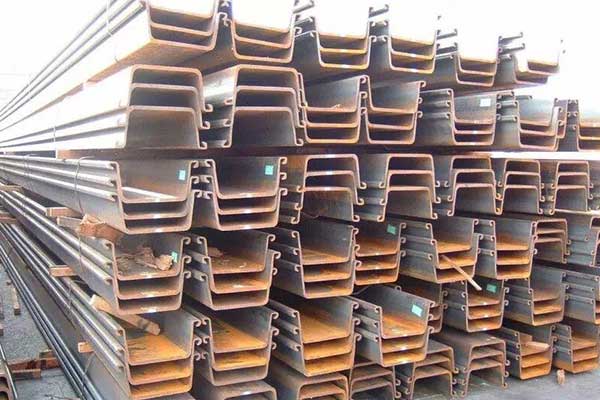
A steel sheet pile is a long structural steel section with interlocking edges. It is driven or pressed into the ground to create a continuous wall that retains soil and helps control water infiltration.
Steel sheet piles are generally manufactured from high-strength structural steel and are available in different profiles, thicknesses, and lengths.
Common steel sheet pile profiles include:
- U-Type Steel Sheet Piles: Featuring a U-shaped cross-section, these piles are widely used in retaining walls, riverbank protection, and temporary excavation support.
- Z-Type Steel Sheet Piles: Designed with a Z-shaped cross-section, they offer a high section modulus and are suitable for projects requiring greater structural strength.
- Straight Web Steel Sheet Piles: Commonly used in cellular structures and applications where tensile strength at the interlocks is important.
- Cold-Formed Steel Sheet Piles: Manufactured through a cold-forming process, these are often used in light to medium-duty construction applications.
Depending on ground conditions and project requirements, steel sheet piles can be installed using vibratory hammers, impact hammers, or hydraulic press-in equipment.
Main Applications of Steel Sheet Piles
Steel sheet piles are widely used in construction and infrastructure projects due to their strength and versatility.
1. Retaining Walls
Steel sheet piles provide effective soil retention and prevent ground movement. They are commonly used in highway construction, railway projects, slope stabilization, and industrial developments.
2. Cofferdams and Water Control
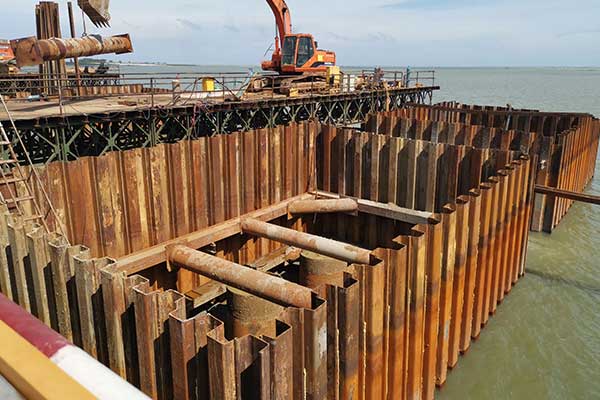
Steel sheet piles create temporary enclosures that reduce water infiltration, making them suitable for bridge foundations, dam construction, port development, and underwater construction.
3. Deep Excavation Support
Steel sheet piles provide lateral soil support during excavation. Typical applications include basement construction, subway stations, underground parking, pipeline installation, and foundation pits.
4. Marine and Port Construction
Steel sheet piles are widely used in marine infrastructure, including quay walls, dock walls, harbors, waterfront structures, and coastal protection projects.
5. Flood Protection and Riverbank Reinforcement
Their interlocking structure helps reduce soil erosion and water infiltration, making them suitable for flood barriers, canals, drainage channels, and riverbank protection.
Key Benefits of Steel Sheet Piles
Steel sheet piles offer several advantages that make them a popular choice for modern construction projects.
1. High Strength and Structural Stability
Manufactured from structural steel, sheet piles offer excellent load-bearing properties. Their interlocking design creates a continuous wall that can resist lateral earth pressure and, when properly designed, water pressure.
2. Fast Installation
Steel sheet piles can be installed relatively quickly using specialized driving or pressing equipment. This reduces construction time, labor requirements, and overall project costs.
3. Reusability and Cost Efficiency
One of the biggest advantages of steel sheet piles is their potential for reuse. In temporary construction projects, they can often be extracted and reused in other applications, provided their structural condition remains suitable.
This helps reduce material waste and improve project cost efficiency.
4. Effective Soil and Water Retention
The interlocking connections between sheet piles form a continuous barrier that helps retain soil and limit water infiltration. Additional sealing materials can be used when lower water seepage rates are required.
5. Flexible Design
Steel sheet piles are available in different profiles, dimensions, and steel grades. Engineers can select suitable specifications according to excavation depth, soil conditions, groundwater levels, and structural requirements.
6. Long Service Life
With proper material selection, corrosion protection, and maintenance, steel sheet piles can provide long-term performance. Protective coatings and other corrosion-control measures are particularly important in marine and chemically aggressive environments.
Steel Sheet Pile vs. Concrete Retaining Wall
Steel sheet piles and concrete retaining walls are both widely used in construction, but they have different advantages.
| Comparison | Steel Sheet Piles | Concrete Retaining Walls |
|---|---|---|
| Installation | Generally faster | Often requires more construction stages |
| Excavation | Can reduce excavation work | May require larger excavation areas |
| Reusability | Often reusable | Generally not reusable |
| Weight | Relatively lightweight | Heavy |
| Applications | Cofferdams, excavation support, marine works | Permanent retaining structures and foundations |
| Construction Flexibility | Available in different profiles and lengths | Depends on structural design |
The right solution depends on project requirements, ground conditions, construction schedules, and overall lifecycle costs.
Conclusion
Steel sheet piles have become an important part of modern construction, especially in projects where soil stability and water control are major concerns. From building retaining walls and cofferdams to supporting deep excavations and protecting riverbanks, they offer a practical solution for many engineering challenges.