

HDPE vs LLDPE Geomembrane: What is the Difference?
HDPE and LLDPE are two of the most widely used polyethylene geomembranes for containment, waterproofing, and environmental protection projects. Although both materials provide low permeability and good chemical resistance, they perform differently in terms of flexibility, tensile strength, elongation, and installation conditions.
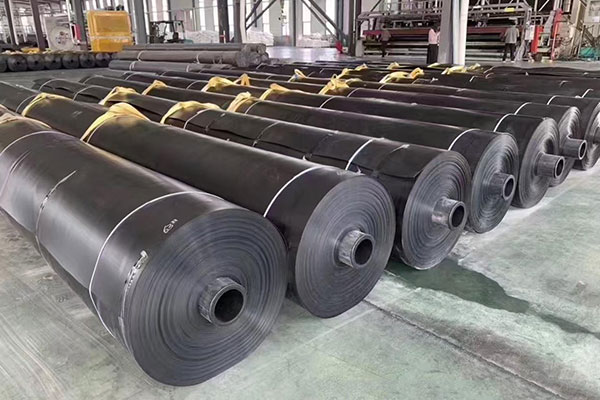
What is HDPE Geomembrane?
HDPE geomembrane is made from high-density polyethylene resin combined with carbon black, antioxidants, and stabilizers.
Because of its relatively high density and molecular structure, HDPE geomembrane provides excellent chemical resistance, durability, and dimensional stability.
Typical applications include:
- Landfill liners and caps
- Mining and heap leach pads
- Tailings ponds
- Wastewater treatment ponds
- Reservoirs and canals
- Industrial containment systems
- Aquaculture and agricultural ponds
HDPE is especially suitable for projects where long-term durability and chemical resistance are important.
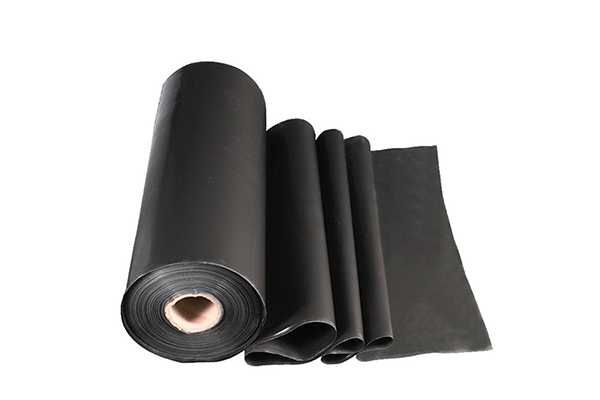
What is LLDPE Geomembrane?
LLDPE geomembrane is made from linear low-density polyethylene. Compared with HDPE, its molecular structure gives the material greater flexibility and elongation.
LLDPE geomembrane can better conform to uneven surfaces and tolerate settlement or movement in the subgrade.
Common applications include:
- Pond liners
- Floating covers
- Secondary containment
- Landfill caps
- Water reservoirs
- Projects with irregular terrain
- Containment systems where settlement is expected
Its flexibility makes installation easier in areas with complex shapes, corners, slopes, or ground movement.
HDPE vs LLDPE Geomembrane: Quick Comparison
| Property | HDPE Geomembrane | LLDPE Geomembrane |
|---|---|---|
| Density | Higher | Lower |
| Flexibility | Moderate | High |
| Tensile strength | Higher | Lower than HDPE |
| Elongation | Lower | Higher |
| Chemical resistance | Excellent | Very good |
| UV resistance | Excellent | Very good |
| Conformability | Moderate | Excellent |
| Resistance to settlement | Moderate | Better |
| Typical applications | Landfills, mining, wastewater | Ponds, covers, irregular surfaces |
The main difference is that HDPE focuses more on strength and long-term chemical resistance, while LLDPE focuses more on flexibility and deformation capacity.
Key Differences Between HDPE and LLDPE Geomembranes
1. Flexibility and Elongation
LLDPE is significantly more flexible than HDPE.
This allows the liner to stretch and adapt when the foundation settles or when the installation surface has irregular contours.
For projects involving:
- Uneven subgrades
- Complicated shapes
- Frequent settlement
- Corners and transitions
LLDPE may provide better installation adaptability. HDPE is stiffer, so proper subgrade preparation becomes more important.
2. Tensile Strength
HDPE generally provides higher tensile strength and stiffness.
This makes it suitable for large containment facilities where the liner must maintain structural stability over a long service period.
However, higher stiffness does not always mean better performance in every project. If the foundation experiences significant deformation, a more flexible LLDPE liner may perform better.
3. Chemical Resistance
Both HDPE and LLDPE provide good resistance to many chemicals.
However, HDPE is commonly selected for demanding applications involving:
- Landfill leachate
- Mining solutions
- Industrial wastewater
- Chemical containment
Its chemical resistance is one reason HDPE remains widely used in environmental containment projects.
The actual compatibility of any geomembrane should still be evaluated according to the chemicals, concentrations, temperatures, and exposure conditions involved.
4. Installation Conditions
LLDPE is easier to conform to irregular terrain because of its flexibility.
It can be particularly useful around:
- Pipes
- Corners
- Penetrations
- Curved surfaces
- Uneven foundations
HDPE requires more careful placement because the material is comparatively rigid.
However, both HDPE and LLDPE geomembranes can be joined using thermal welding methods when properly installed by experienced technicians.
5. Resistance to Settlement
Ground settlement is another important factor when comparing HDPE and LLDPE.
LLDPE has higher elongation and can tolerate more deformation before failure. This makes it useful for landfill caps, ponds, and other projects where the subgrade may move over time.
HDPE can still perform very well on stable foundations, but large differential settlement should be considered during liner design.
6. UV and Weather Resistance
HDPE geomembrane containing properly formulated carbon black and stabilizers provides excellent resistance to ultraviolet exposure.
LLDPE geomembrane also offers good outdoor durability, although actual performance depends on the resin formulation, thickness, exposure conditions, and manufacturer quality.
For permanently exposed geomembranes, UV resistance should be included as part of the material specification.
Which is Better: HDPE or LLDPE Geomembrane?
There is no single material that is better for every project.
Choose HDPE geomembrane when your project requires:
- High chemical resistance
- High tensile strength
- Long-term containment
- Stable foundation conditions
- Landfill, mining, or industrial applications
Choose LLDPE geomembrane when your project requires:
- Greater flexibility
- Higher elongation
- Better conformability
- Resistance to ground settlement
- Installation on irregular surfaces
In many cases, project design conditions are more important than simply comparing material strength.
How to Choose the Right Geomembrane
Before selecting HDPE or LLDPE, consider the following factors:
Application
Determine whether the liner will be used for water storage, landfill containment, mining, wastewater, or another application.
Subgrade Conditions
Stable and well-prepared surfaces are generally suitable for HDPE, while areas with greater settlement or irregularity may benefit from LLDPE.
Chemical Exposure
Check the type and concentration of chemicals that may contact the liner.
Thickness
Geomembrane thickness should be selected according to project design, mechanical loading, installation conditions, and applicable specifications.
Installation Environment
Slope, temperature, terrain, welding conditions, and liner geometry can all influence material selection.
Conclusion
Now you understand the main differences between HDPE and LLDPE geomembranes. HDPE provides excellent strength, chemical resistance, and durability, while LLDPE offers greater flexibility and adaptability to irregular or moving foundations.
Roadsky is a professional geomembrane manufacturer and supplier in China, providing HDPE and other geosynthetic lining materials for ponds, reservoirs, landfills, mining, wastewater, and environmental projects. Contact us for geomembrane specifications, thickness recommendations, bulk pricing, and project-based solutions.