

How to Repair Potholes with Cold Mix Asphalt
Potholes are a common road hazard. If they are not repaired in time, traffic loads and water infiltration can cause the damaged area to expand and may eventually affect the pavement base and driving safety.
Common pothole repair methods include throw-and-roll repair, semi-permanent repair, and spray-injection repair. Among them, semi-permanent repair provides better preparation and compaction than a simple temporary patch.
This guide explains how to carry out a semi-permanent pothole repair using cold mix asphalt.
Before Starting the Repair
Before construction begins, set up suitable traffic control devices around the work area.
Depending on the road and traffic conditions, these may include traffic cones, warning signs, barricades, or other temporary traffic control equipment.
Make sure the repair area is clearly separated from moving traffic before starting work.
Step 1: Cut and Shape the Pothole
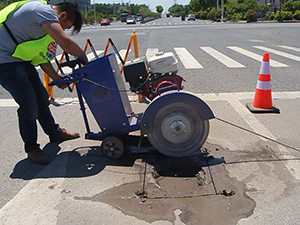
First, remove the damaged and loose pavement around the pothole.
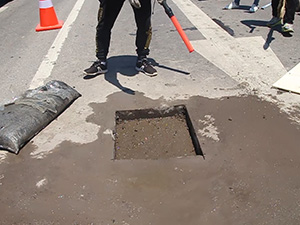
Cut the repair area into a regular shape, usually square or rectangular, according to the size and depth of the damaged pavement. The edges should be as vertical and stable as possible.
This helps ensure that the new asphalt is placed against sound pavement rather than loose or broken edges.
A hand-held pavement saw or road cutting machine can be used for this step.
Step 2: Clean the Pothole
After cutting, thoroughly clean the repair area.
Remove:
- Loose asphalt
- Dust and dirt
- Stones and debris
- Standing water
The bottom and sides of the pothole should be as clean as possible before placing the cold mix asphalt.
A clean and stable repair area helps improve bonding and reduces the risk of premature patch failure.
Step 3: Fill with Cold Mix Asphalt
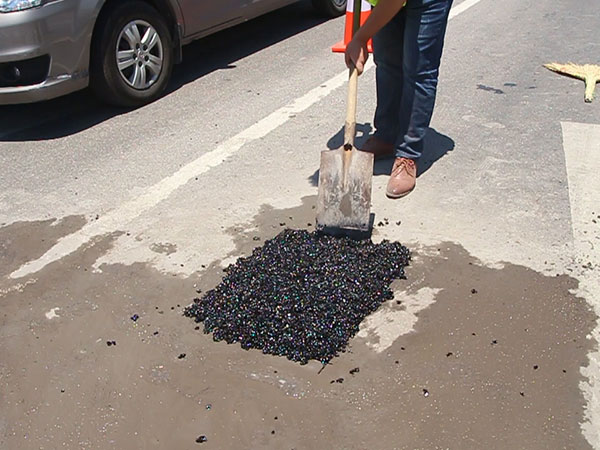
Pour or shovel the cold mix asphalt into the prepared pothole.
Spread the material evenly so that all corners and edges are properly filled.
Before compaction, the cold mix asphalt should normally be placed slightly higher than the surrounding pavement to allow for settlement during compaction.
For deeper potholes, it is better to fill and compact the material in layers rather than placing one very thick layer at once.
Step 4: Compact the Asphalt
Proper compaction is one of the most important parts of pothole repair.
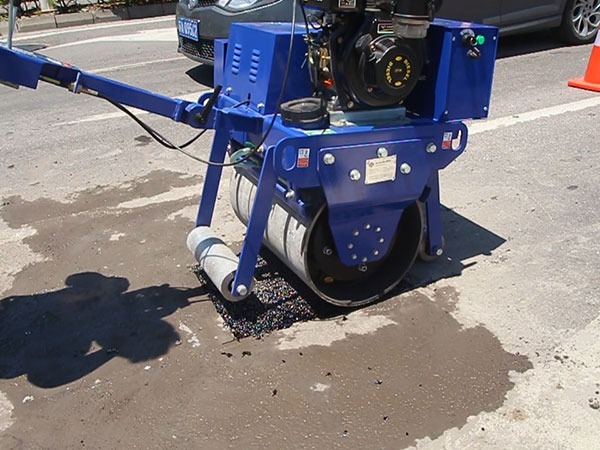
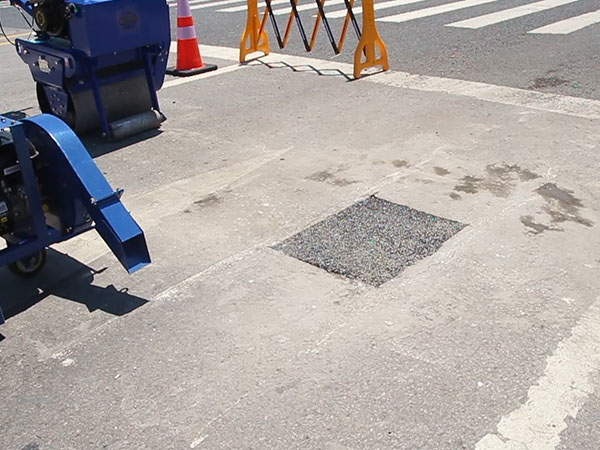
Use a plate compactor, hand tamper, or small vibratory roller depending on the size of the repair area.
Compact the patch evenly, working from the edges toward the center.
Continue compaction until the cold mix asphalt is firm and the repaired surface is approximately level with the surrounding pavement.
Insufficient compaction can leave excessive air voids in the patch, making it easier for water to enter and reducing the service life of the repair.
Step 5: Check the Surface and Open to Traffic
After compaction, inspect the repaired area.
The finished patch should be:
- Firm and well compacted
- Approximately level with the existing road surface
- Free from loose asphalt
- Smooth enough for normal traffic
If necessary, add a small amount of cold mix asphalt and compact the area again.
Once the repair is completed and the material is sufficiently stable, remove the traffic control devices and reopen the road according to the cold mix asphalt manufacturer’s recommendations.
Why Use Cold Mix Asphalt for Pothole Repair?
Cold mix asphalt is widely used for pothole repair because it can be applied without heating the material on site.
Compared with hot mix asphalt, it is convenient for maintenance crews working on small and medium-sized repairs, especially when an asphalt plant or heating equipment is not available nearby.
Other advantages include:
- Easy storage and transportation
- Simple application
- Less equipment required
- Suitable for emergency and routine maintenance
- Can be used for different road repair projects
The actual repair performance still depends on pavement preparation, material quality, compaction, traffic conditions, and drainage.
Tips for a Longer-Lasting Pothole Repair
Good preparation is often more important than simply adding more asphalt.
Before filling the pothole, remove all weak pavement and make sure the repair area has stable edges. For deeper damage, compact the cold mix asphalt layer by layer.
It is also important to check why the pothole formed. If poor drainage or a damaged pavement base is causing repeated failures, repairing only the surface may not solve the problem permanently.
Conclusion
Repairing potholes with cold mix asphalt is a relatively simple process, but proper preparation and compaction are essential.
Roadsky supplies cold mix asphalt for pothole and road maintenance applications, suitable for contractors, distributors, and road maintenance projects. Contact us for product specifications, bulk supply, and quotation.