

Applications and Advantages of Diesel Forklifts
Diesel forklifts are powerful, durable, and versatile machines widely used across industries for material handling. They are a preferred choice for heavy-duty operations where lifting, transporting, and stacking heavy loads are required. In this article, we explore the applications and advantages of diesel forklifts, highlighting why they remain a top choice in warehouses, construction sites, and manufacturing facilities.
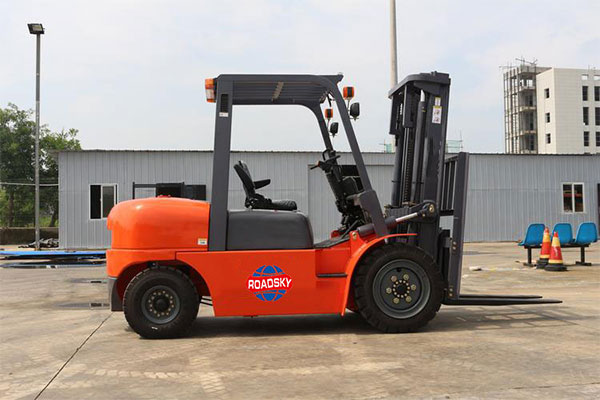
Applications of Diesel Forklifts
1. Construction Sites
Diesel forklifts are commonly used in construction projects for moving heavy materials such as steel beams, cement bags, and large pallets. Their robust engines and high torque make them ideal for handling uneven terrain and outdoor environments.
2. Warehousing and Logistics
In warehouses and logistics centers, diesel forklifts efficiently transport heavy goods over long distances. They are suitable for loading and unloading trucks, moving pallets, and stacking materials in outdoor storage areas.
3. Manufacturing Plants
Manufacturing operations often require the handling of raw materials and finished products. Diesel forklifts can lift and transport heavy machinery, equipment, and bulk materials, streamlining production processes.
4. Ports and Shipping Yards
At ports and shipping yards, diesel forklifts handle shipping containers, crates, and heavy cargo. Their powerful engines ensure consistent performance in outdoor and demanding environments.
5. Recycling and Waste Management
Diesel forklifts are used to transport large waste containers, recyclables, and scrap materials. Their strength and stability make them ideal for these high-load applications.
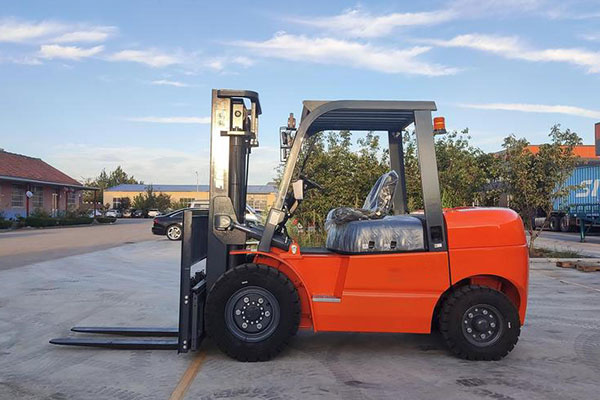
Advantages of Diesel Forklifts
1. High Lifting Capacity
Diesel forklifts are designed for heavy-duty operations. They can lift larger loads compared to electric or LPG forklifts, making them suitable for industries requiring substantial material handling.
2. Durability and Reliability
These forklifts are built to withstand tough environments, including rough terrain and outdoor conditions. Diesel engines provide reliable performance over long operating hours, reducing downtime.
3. Outdoor Capability
Unlike electric forklifts, diesel forklifts perform efficiently outdoors. Their engines are not affected by weather conditions, and they can operate on uneven or unpaved surfaces without difficulty.
4. Fuel Efficiency
Modern diesel forklifts are designed for fuel efficiency. They provide extended operation with fewer refueling stops, which is ideal for continuous, high-demand tasks.
5. Lower Maintenance Costs
Diesel engines are generally easier to maintain than electric systems, especially in heavy-duty applications. Spare parts are widely available, and maintenance is straightforward.
6. Versatility
Diesel forklifts can handle a variety of attachments, including clamps, rotators, and fork extensions, making them adaptable to multiple tasks in different industries.
Conclusion
Diesel forklifts are indispensable in industries where strength, durability, and outdoor capability are critical. Their ability to handle heavy loads efficiently makes them ideal for construction, manufacturing, warehousing, ports, and waste management.