

What is Geogrid Used For? 6 Common Applications
Geogrid is an important geosynthetic material widely used in road construction, soil stabilization, and civil engineering projects. Its primary purpose is to reinforce soil, improve ground stability, and increase the load-bearing capacity of roads and other structures.
So, what is geogrid used for? Common applications include road base reinforcement, soil stabilization, retaining walls, slope reinforcement, foundation support, and ground improvement.
What is Geogrid?
Geogrid is a geosynthetic reinforcement material made from polymers or fiberglass. It features an open grid structure that allows soil and aggregate particles to interlock with the grid.
This interaction provides tensile reinforcement, restricts lateral soil movement, and improves the stability of reinforced structures.
The three common types include:
- Uniaxial Geogrid: Designed for retaining walls, reinforced slopes, and embankments.
- Biaxial Geogrid: Used for road construction, soil stabilization, and aggregate base reinforcement.
- Triaxial Geogrid: Features a triangular aperture structure that provides multidirectional aggregate confinement, making it suitable for road base reinforcement and ground stabilization.
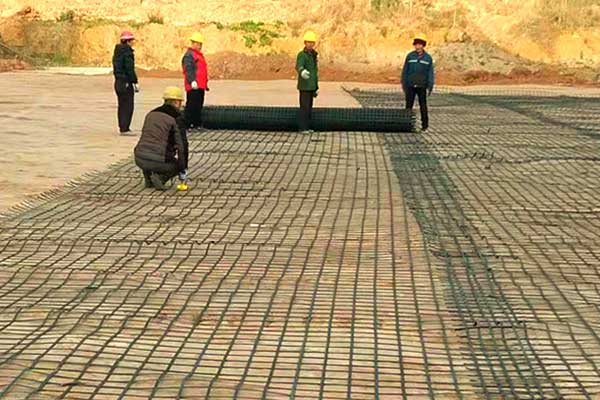
What is Geogrid Used For? 6 Applications
1. Road Construction
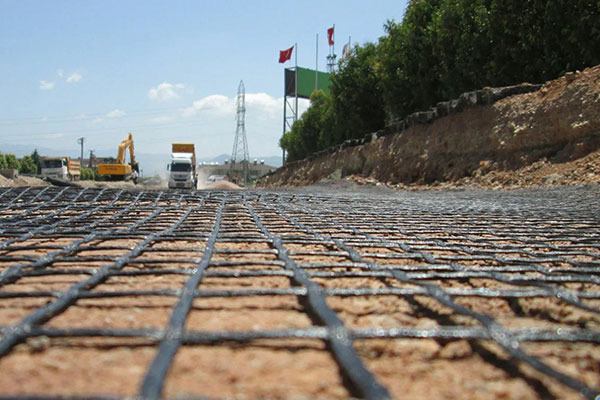
Geogrid is widely used in road construction to reinforce aggregate base and subbase layers.
It helps improve aggregate interlocking, reduce lateral movement, and distribute traffic loads more effectively. This can reduce rutting and pavement deformation, especially on roads built over weak subgrades.
Typical applications include highways, rural roads, industrial roads, and access roads.
2. Soil Stabilization
Geogrid helps improve the mechanical stability of weak soils, including soft clay and loose soil.
By reinforcing soil and aggregate layers, it helps improve load-bearing performance and reduce excessive deformation.
Common applications include construction platforms, temporary access roads, industrial yards, and ground improvement projects.
3. Retaining Wall Reinforcement
Uniaxial geogrid is commonly used in mechanically stabilized earth (MSE) retaining walls.
Installed in horizontal layers between compacted soil, geogrid provides tensile reinforcement and helps resist lateral earth pressure.
It is widely used in highway retaining walls, commercial developments, and infrastructure construction.
4. Slope Stabilization
Geogrid reinforces soil slopes and embankments by providing tensile resistance within the soil structure.
It helps improve slope stability and reduce internal soil movement, making it suitable for highway embankments, roadside slopes, and steep reinforced soil structures.
5. Foundation and Ground Support
Geogrid can improve the performance of aggregate layers used in foundation support and heavy-duty construction platforms.
It is commonly applied in industrial foundations, crane working platforms, container yards, and heavy equipment access areas.
6. Industrial and Infrastructure Projects
Geogrid is also used in railway subgrades, logistics centers, ports, parking areas, and industrial yards.
Its reinforcement properties help improve aggregate confinement and support performance under heavy loads.
What Are the Benefits of Using Geogrid?
Using geogrid in construction projects offers several important advantages:
- Improved Soil Stability: Reinforces weak soil and aggregate layers.
- Higher Load-Bearing Performance: Helps distribute loads and improve structural support.
- Reduced Deformation: Restricts lateral movement and helps reduce rutting.
- Longer Service Life: Can improve the durability of reinforced road and soil structures.
- Cost Efficiency: May reduce aggregate requirements when supported by engineering design.
- Versatile Applications: Suitable for roads, retaining walls, slopes, foundations, and ground reinforcement.
FAQs
Not every road requires geogrid. However, it is particularly useful for roads built over weak subgrades or projects requiring additional base reinforcement.
Uniaxial geogrid provides primary tensile reinforcement in one direction and is commonly used for retaining walls and slopes. Biaxial geogrid provides reinforcement in two directions, while triaxial geogrid features a triangular aperture structure designed for multidirectional aggregate confinement.
Geogrid primarily provides soil reinforcement through tensile resistance and mechanical interlocking. Geotextile is commonly used for separation, filtration, and drainage.
Conclusion
Now that you understand what geogrid is used for, you can better evaluate its benefits for your construction project. From road construction and soil stabilization to retaining walls and slope reinforcement, geogrid provides an effective solution for improving ground stability and structural performance.
Looking for a reliable geogrid supplier? Roadsky provides quality geogrid solutions for civil engineering and infrastructure projects. Contact us today to discuss your requirements and request a quotation.