

PP Non-Woven Geotextile: What You Need to Know
PP non-woven geotextile is widely used in civil engineering, road construction, drainage, filtration, erosion control, and other infrastructure projects. Made mainly from polypropylene fibers, it provides a practical combination of filtration, separation, drainage, and protection.
Compared with many traditional construction materials, PP non-woven geotextile is lightweight, easy to install, and available in different weights and strengths for different project requirements.
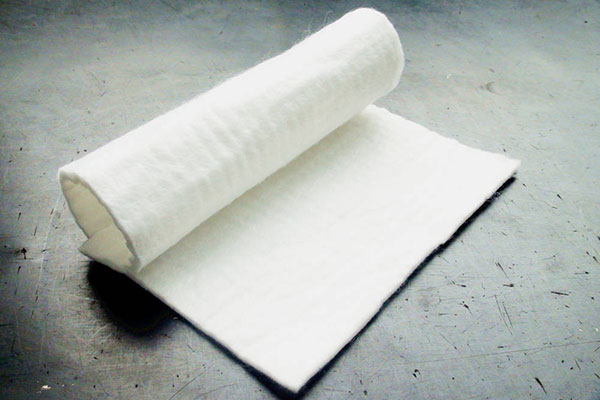
What is PP Non-Woven Geotextile?
PP non-woven geotextile is a permeable geosynthetic fabric manufactured from polypropylene (PP) fibers.
Unlike woven geotextiles, which are produced by weaving yarns together, non-woven geotextiles have fibers bonded together mechanically, thermally, or through a combination of manufacturing processes.
For many civil engineering applications, needle-punched non-woven geotextiles are commonly used. The fibers form a three-dimensional structure containing small interconnected pores.
This structure allows water to pass through the fabric while helping retain soil particles.
As a result, PP non-woven geotextile can perform several functions at the same time, including:
- Filtration
- Separation
- Drainage
- Protection
- Erosion control
Main Advantages of PP Non-Woven Geotextile
Polypropylene is commonly used for geotextiles because it offers several practical advantages.
1. Good Water Permeability
PP non-woven geotextile allows water to pass through while helping prevent soil particles from moving with the water. This makes it suitable for drainage and filtration systems.
2. Chemical Resistance
Polypropylene has good resistance to many chemicals commonly found in soil, making it suitable for underground and environmental applications.
3. Lightweight and Easy to Install
PP geotextile is lightweight, easy to transport, and simple to unroll and install on construction sites.
4. Good Puncture Resistance
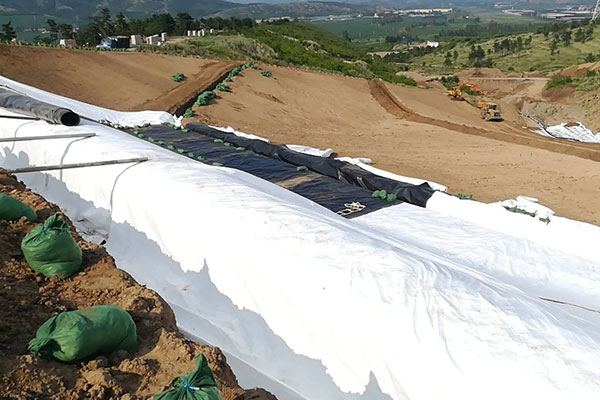
Non-woven geotextile can provide cushioning and protection, especially when installed above or below geomembranes.
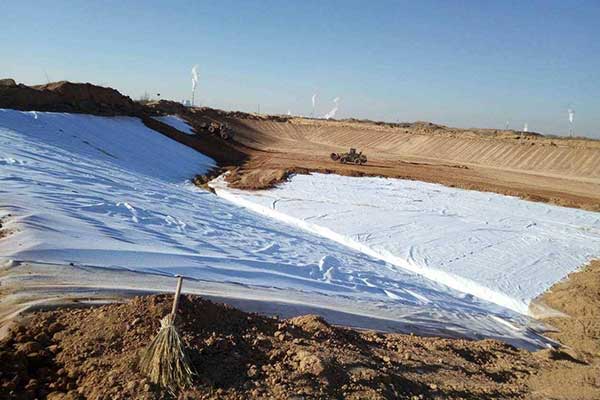
PP Non-Woven Geotextile Common Applications
PP non-woven geotextile is widely used in:
- Road and highway construction
- Drainage systems
- Retaining walls
- Railways
- Landfills
- Ponds and reservoirs
- Embankments
- Riverbanks
- Landscaping
- Geomembrane protection
For example, in road construction, it can separate soft soil from aggregate layers. In drainage systems, it acts as a filter that allows water to pass while retaining soil.
PP Non-Woven Geotextile Important Specifications
When choosing PP non-woven geotextile, GSM is important, but it should not be the only consideration.
Common parameters include:
GSM
Geotextile weight is usually measured in g/m².
Common products range from about 100 g/m² to 1000 g/m² or more, depending on the application.
Tensile Strength
Tensile strength shows how much pulling force the material can withstand. Higher-strength geotextiles are generally used in more demanding construction conditions.
Puncture Resistance
This is especially important when geotextile is used under aggregate or as a protective layer for geomembranes.
Permeability
Good permeability allows water to pass through the fabric efficiently, which is important for drainage and filtration.
Apparent Opening Size
Apparent Opening Size, or AOS, helps determine the filtration performance of the geotextile.
PP Non-Woven vs. Woven Geotextile
PP non-woven geotextile is generally more suitable for filtration, drainage, and protection.
Woven geotextile usually provides higher tensile strength and is often used for separation and reinforcement.
The right choice depends on the main function required by the project.
How to Choose PP Non-Woven Geotextile
Before choosing a product, determine its main application first.
For road separation, consider tensile strength, puncture resistance, and permeability.
For drainage, focus on water flow and opening size.
For geomembrane protection, GSM, thickness, and puncture resistance are more important.
You should also confirm:
- GSM
- Roll width and length
- Tensile strength
- Elongation
- Puncture resistance
- Permeability
- AOS
- Required project standards
For engineering projects, choosing geotextile only by GSM is usually not enough.
Conclusion
Now you have a better understanding of what PP non-woven geotextile is, its main functions, and where it is commonly used. It is a practical choice for filtration, separation, drainage, protection, and erosion control in many civil engineering projects.
When choosing the right product, do not focus only on GSM. Tensile strength, puncture resistance, permeability, and AOS should also be considered according to the application.
Roadsky is a professional PP non-woven geotextile manufacturer and supplier in China. We provide different weights, roll sizes, and specifications for various projects. Contact us for technical details and bulk quotations.