

How to Choose an Asphalt Crack Sealing Machine
Choosing an asphalt crack sealing machine can feel difficult when there are many models, tank sizes, and heating systems available. But the decision becomes much easier when you focus on one question: What type of crack repair work do you do most often?
A small contractor repairing driveways and parking lots does not need the same machine as a municipal road-maintenance team. Likewise, a crew working on highways or airport pavements needs more capacity and continuous working time than a team handling occasional local repairs.
In this guide, we will explain how to choose the right asphalt crack sealing machine based on your project size, work frequency, sealant type, and jobsite conditions.
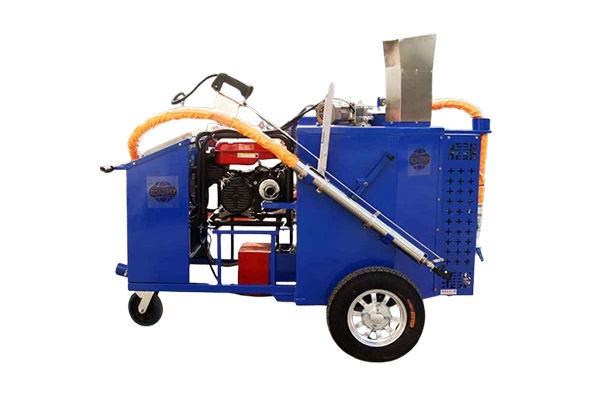
1. Consider Your Typical Crack Repair Projects
The first thing to consider is where the machine will be used.
For small jobs such as driveways, parking lots, sidewalks, utility cuts, and local roads, a compact hand-push asphalt crack filling machine is often the best choice. These machines are easy to move, simple to operate, and suitable for crews that only need to seal cracks occasionally.
For regular road-maintenance work, a larger machine can save time. Municipal crews and contractors often need more sealant capacity, better temperature control, and a heated hose to keep work moving throughout the day.
For highways, industrial parks, airports, and large municipal projects, a trailer-mounted asphalt crack sealing machine is usually more practical. It can carry more material, work for longer periods, and reduce the number of refill stops.
Before buying, think about your average project—not only your biggest project. A machine that is too small can slow your team down. A machine that is too large may cost more to transport, operate, and maintain.
2. Choose the Right Tank Capacity
Tank capacity is one of the most important factors when choosing an asphalt crack sealing machine.
A smaller tank is easier to handle and works well for light repairs. A larger tank lets your crew work longer without stopping, which is useful for road-maintenance projects with many cracks.
| Machine Type | Suitable Projects | Main Advantage |
|---|---|---|
| Small hand-push machine | Driveways, small parking lots, local repairs | Easy to move and operate |
| Mid-capacity machine | Routine contractor and municipal work | Good balance of capacity and mobility |
| Large trailer-mounted machine | Highways, airports, long road sections | Long working time and fewer refills |
For example, the RS-60 Asphalt Crack Filling Machine has a 60 L material tank and is suitable for small asphalt and concrete crack-repair projects.
The RS-100 Asphalt Crack Filling Machine is available in 100 L and 200 L capacities. It is a practical option for crews that need more working time while still requiring a compact and mobile machine.
For larger projects, the RS-500 Asphalt Crack Filling Machine has a 500 L tank and trailer-type design. It is better suited for continuous road crack sealing work.
3. Check the Heating System
A good heating system is just as important as tank size.
Most asphalt crack sealant is hot-applied, which means it must be heated to the correct temperature before use. If the sealant is too cold, it may not flow smoothly into the crack. If it gets too hot, it may lose quality and become harder to use.
When choosing an asphalt crack sealing machine, look for:
- Stable temperature control
- Indirect heating system
- Heated hose and application gun
- Digital temperature display
- Reliable burner and circulation system
Indirect heating is especially useful because it helps heat sealant evenly. This can reduce the risk of overheating and help maintain the performance of the material.
The RS-100 and RS-200 models use thermal circulation heating and automatic temperature control. The RS-500 uses a diesel heating system with an insulated tank, helping maintain sealant temperature during longer projects.
Always check whether the machine is compatible with the asphalt crack sealant you plan to use.
4. Think About Mobility and Jobsite Access
A machine may have the right capacity, but it also needs to fit your working environment.
Hand-push asphalt crack sealing machines are ideal for tight spaces and small work areas. They are useful when the crew needs to move around parked vehicles, sidewalks, narrow roads, or residential areas.
Trailer-mounted machines are better for long road sections and larger projects. They can be towed behind a vehicle and usually offer more material capacity and stronger performance.
Before choosing, check these details:
- Machine weight
- Overall dimensions
- Trailer requirements
- Hose length
- Turning radius
- Ground clearance
- Access conditions at the jobsite
Hose length is often overlooked. A longer heated hose gives the operator more reach and reduces the need to move the machine repeatedly. However, it should still be easy to control and protect during the job.
5. Do Not Forget Crack Preparation
The asphalt crack sealing machine is only one part of the repair process. Good crack preparation can make a big difference in the final result.
Before applying sealant, cracks should be clean, dry, and free from loose material. If dust, water, or debris remains inside the crack, the sealant may not bond properly.
A typical crack sealing process includes:
- Inspect the pavement and identify cracks that need sealing.
- Use an asphalt crack router if a clean, uniform groove is needed.
- Remove dust and loose material with an air blower.
- Heat the crack sealant to the recommended temperature.
- Apply sealant with the asphalt crack sealing machine.
- Allow the material to cool before opening the area to traffic.
Using a crack router can help create a more even reservoir for sealant. This allows the material to fill the crack more consistently and helps protect the pavement from water and debris.
6. Compare Application Control and Safety Features
A good asphalt crack sealing machine should be easy and safe for your crew to operate.
Look for features such as adjustable material flow, clear temperature displays, stable wheels or trailer chassis, heated hose protection, and easy access for maintenance.
For larger machines, it is also helpful to have adjustable pressure, digital monitoring, splash protection, and a well-designed loading area. These features can improve daily efficiency and reduce material waste.
The operator should always follow correct heating, loading, application, and shutdown procedures. Regular cleaning and maintenance will also help protect the pump, hose, burner, and electrical system.
7. Ask About Maintenance and Spare Parts
Before purchasing an asphalt crack filling machine, ask the supplier about long-term support.
Important questions include:
- What daily maintenance is required?
- Are spare parts available?
- How should the heated hose and pump be maintained?
- What is included in the warranty?
- Is an operator manual provided?
- Can the supplier recommend a suitable model based on your project?
The lowest price is not always the best value. A reliable machine with proper after-sales support can reduce downtime and help your crew work more efficiently over time.
Final Thoughts
The best asphalt crack sealing machine is the one that matches your normal workload and repair process.
Choose a compact hand-push machine for small repairs and limited-access areas. Choose a larger trailer-mounted machine if your team handles regular municipal work, highways, or large crack-sealing projects.
Focus on tank capacity, heating quality, mobility, hose length, application control, and maintenance support. Most importantly, choose a complete crack-repair solution that includes proper crack sealant, crack routing, cleaning, and sealing equipment.
Roadsky supplies asphalt crack filling equipment for projects of different sizes. Contact us with your project details, expected sealant usage, and destination country to receive a suitable machine recommendation.