

Steel Sheet Pile Retaining Wall: What You Need to Know
Steel sheet pile retaining walls are one of the most reliable and cost-effective solutions for earth retention and excavation support. They are widely used in construction, marine engineering, and infrastructure projects due to their strength, versatility, and ease of installation.

What is a Steel Sheet Pile Retaining Wall?
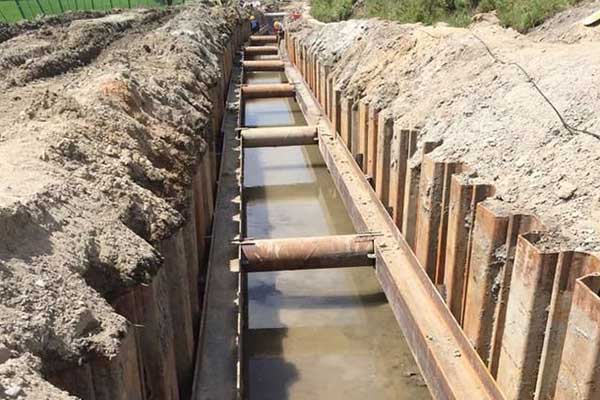
A steel sheet pile retaining wall is a vertical barrier made from interlocking steel sheets driven into the ground. These sheets create a continuous wall that resists the pressure of soil and water. The interlocking design provides stability and makes it possible to construct walls of various lengths and depths depending on project requirements.
Key Features of Steel Sheet Pile Walls
- High Strength – Made from durable steel, they can withstand significant earth and water pressure.
- Reusability – Steel sheet piles can often be extracted and reused in temporary works.
- Flexibility – Can be designed for straight, curved, or angled walls.
- Water Tightness – Interlocks can be sealed to provide effective groundwater cut-off.
Common Applications
Steel sheet pile retaining walls are used in a wide range of civil engineering and construction projects:
- Harbor and Marine Structures – Quay walls, jetties, and piers.
- Basement and Underground Excavations – Temporary earth retention for deep foundations.
- Flood Protection – Riverbanks, levees, and seawalls.
- Road and Railway Construction – Retaining walls for embankments and cuttings.
- Temporary Works – Cofferdams and shoring systems.
Advantages of Using Steel Sheet Pile Retaining Walls
- Fast Installation – Can be driven quickly with modern piling equipment.
- Cost-Effective – Especially suitable for temporary works where reuse is possible.
- Durability – With proper coating or corrosion protection, they offer long service life.
- Environmentally Friendly – Reusability reduces material waste.
- Adaptability – Works in a wide variety of soil conditions.
Installation Process
The installation of a steel sheet pile retaining wall typically follows these steps:
- Site Preparation – Surveying, soil analysis, and setting out the wall alignment.
- Driving the Piles – Using vibratory or impact hammers to drive the steel sheets into the ground.
- Interlocking – Ensuring proper connection between sheet piles through their interlocking design.
- Cutting and Capping – Trimming piles to the required height and adding a capping beam for structural stability.
- Anchoring (if required) – Using tie rods or anchors to resist higher earth pressures.
Steel Sheet Pile Types
- U-Type Sheet Piles – Provide excellent bending strength and are widely used in retaining walls.
- Z-Type Sheet Piles – Offer high section modulus and are suitable for heavy-duty applications.
- Straight Web Sheet Piles – Commonly used for temporary structures or separating walls.
Maintenance and Longevity
To extend the lifespan of a steel sheet pile retaining wall, protective measures are often applied, such as:
- Hot-Dip Galvanization
- Epoxy or Bituminous Coatings
- Cathodic Protection Systems
With proper maintenance, steel sheet pile walls can last several decades even in marine environments.
Conclusion
A steel sheet pile retaining wall is a reliable, cost-effective, and sustainable solution for soil and water retention in various engineering projects. Its strength, reusability, and cost-effectiveness make it a preferred choice in civil, marine, and geotechnical engineering. With proper design and installation, steel sheet piles deliver long-term stability and performance in diverse applications.