

HDPE Pond Liner: Everything You Need to Know
An HDPE pond liner is a waterproof geomembrane made from high-density polyethylene. It is widely used in fish ponds, irrigation ponds, reservoirs, wastewater lagoons, and other water containment projects.
Compared with natural clay lining, an HDPE liner provides more stable seepage control and is suitable for both small agricultural ponds and large engineering projects.
What is an HDPE Pond Liner?
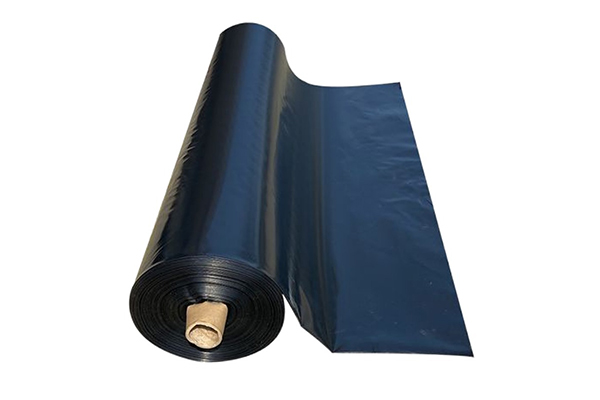
An HDPE pond liner is a flexible synthetic membrane installed on the bottom and slopes of a pond to reduce water loss through the soil.
The liner is usually manufactured in large rolls. During installation, individual sheets are joined together by heat welding to form a continuous waterproof barrier.
HDPE geomembrane is popular because it combines high strength, low permeability, chemical resistance, and long service life.
Why Use HDPE for Pond Lining?
1. Low Water Permeability
HDPE has very low permeability, helping prevent pond water from leaking into the surrounding ground.
This is particularly useful for ponds built on sandy, gravelly, or other highly permeable soils.
2. Good Durability
HDPE pond liners provide strong resistance to tearing, puncturing, and environmental aging when correctly selected and installed.
They are suitable for projects that require long-term water containment.
3. UV Resistance
HDPE geomembranes normally contain carbon black and stabilizers to improve resistance to sunlight and outdoor exposure.
This makes HDPE suitable for pond applications where part of the liner may remain exposed.
4. Chemical Resistance
HDPE can resist many commonly encountered chemicals, salts, acids, and alkalis.
For this reason, it is also widely used in industrial ponds, wastewater treatment systems, mining projects, and agricultural applications.
Common Applications of HDPE Pond Liners
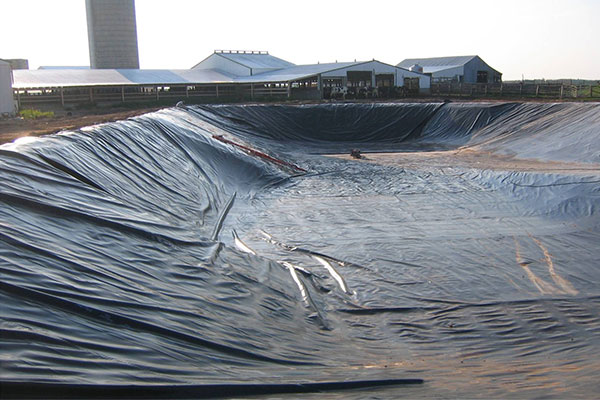
HDPE liners can be used for a wide range of water containment projects, including:
- Fish farming ponds
- Shrimp ponds
- Agricultural irrigation ponds
- Water storage reservoirs
- Farm ponds
- Wastewater lagoons
- Evaporation ponds
- Mining ponds
- Industrial water containment
- Landscape and artificial ponds
For larger projects, HDPE is particularly practical because large sheets can be welded together directly on site.
What Thickness of HDPE Pond Liner Should You Choose?
HDPE pond liners are available in different thicknesses depending on project requirements.
Common options include:
| HDPE Liner Thickness | Typical Use |
|---|---|
| 0.5 mm | Small ponds and light-duty applications |
| 0.75 mm | Agricultural and irrigation ponds |
| 1.0 mm | Fish ponds, water storage and general projects |
| 1.5 mm | Large reservoirs and industrial ponds |
| 2.0 mm | Heavy-duty containment and demanding projects |
For many fish farming and irrigation applications, 0.75 mm to 1.5 mm HDPE pond liners are commonly used.
However, liner thickness should also be selected according to water depth, soil condition, installation environment, and expected service life.
How to Choose the Right HDPE Pond Liner
When selecting an HDPE liner, consider both the project conditions and material performance.
First, determine the pond size and water depth. Larger or deeper ponds may require thicker and stronger geomembranes.
Second, inspect the ground conditions. Sharp stones, roots, or rough surfaces may damage the liner. A nonwoven geotextile layer can be installed underneath for additional protection.
You should also check important liner properties such as:
- Tensile strength
- Tear resistance
- Puncture resistance
- Thickness consistency
- Carbon black content
- UV resistance
- Chemical resistance
Choosing the cheapest liner may reduce initial costs, but material quality and installation reliability are more important for long-term performance.
HDPE Pond Liner Installation
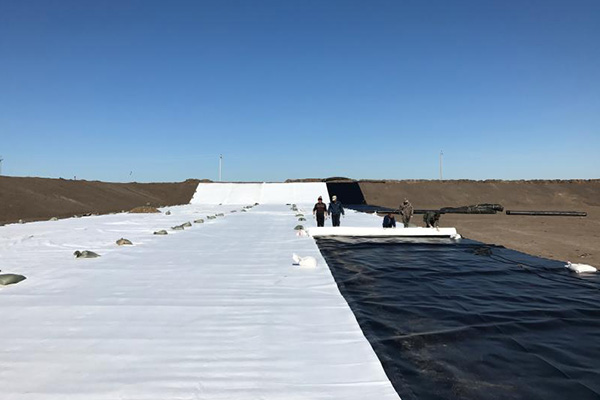
The performance of an HDPE pond liner depends heavily on proper installation.
The typical installation process includes:
1. Site Preparation
Clean and level the pond surface. Remove stones, roots, branches, and other sharp materials.
2. Protective Layer
Install nonwoven geotextile if the soil surface is rough or additional puncture protection is required.
3. Liner Placement
Unroll the HDPE geomembrane carefully across the pond bottom and side slopes. Avoid excessive pulling or stretching during installation.
4. Seam Welding
Adjacent liner sheets are normally joined using hot-wedge welding equipment. Extrusion welding can also be used for corners, repairs, pipe penetrations, and other detailed areas.
5. Seam Inspection
All welded seams should be checked to ensure they are continuous and free from defects.
6. Edge Anchoring
The liner should be securely anchored around the pond perimeter to prevent movement caused by wind, water pressure, or construction activities.
How Long Does an HDPE Pond Liner Last?
A quality HDPE pond liner can typically last around 20–30 years when exposed to outdoor conditions.
When the liner is covered with soil, water, concrete, geotextile, or another protective material, its service life can often reach 50 years or more.
Actual lifespan depends on factors such as UV exposure, material quality, liner thickness, installation quality, chemical environment, and mechanical damage.
HDPE Pond Liner vs PVC Pond Liner
PVC pond liners are generally softer and more flexible, making them easier to install in small ponds with complicated shapes.
HDPE is less flexible but offers higher strength, good UV resistance, and excellent chemical resistance.
For large fish ponds, reservoirs, agricultural projects, and industrial containment, HDPE is often a more practical option.
HDPE Pond Liner vs EPDM Pond Liner
EPDM is a rubber-based liner known for its flexibility. It is commonly used in decorative ponds, garden ponds, and irregular-shaped water features.
HDPE, on the other hand, is commonly selected for larger commercial and engineering projects.
In general:
- HDPE: Better suited for large ponds, reservoirs, aquaculture, agriculture, and industrial projects.
- EPDM: Better suited for small landscape ponds and complex shapes.
Conclusion
An HDPE pond liner provides a durable and effective solution for fish ponds, irrigation ponds, reservoirs, and other water containment projects. The right liner thickness, good site preparation, and professional welding are important for long-term performance.
Roadsky supplies HDPE pond liners in different thicknesses and specifications for agricultural, aquaculture, and engineering projects. Contact us for product specifications, technical support, and a competitive quotation.