

How Much Does a Geomembrane Cost? Price Guide
If you are planning a pond, landfill, reservoir, mining project, or other containment system, one of the first questions is usually: How much does a geomembrane cost?
The answer depends on the material, thickness, surface type, order quantity, and installation requirements. For most projects, geomembrane material costs roughly $0.50 to $7.50 per square meter, while standard HDPE geomembrane commonly falls between $0.50 and $3.50 per square meter for bulk, ex-factory orders.
Let’s look at what actually determines the final price.
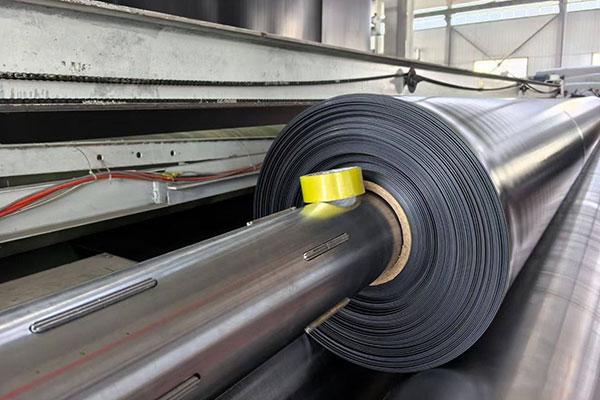
Average Geomembrane Cost per Square Meter
HDPE is one of the most widely used geomembrane materials because it offers good chemical resistance, durability, and relatively economical pricing.
Typical material-only HDPE geomembrane prices can look like this:
| Thickness | Approximate Price | Common Applications |
|---|---|---|
| 0.5 mm | $0.50–$1.20/m² | Fish ponds, aquaculture, small ponds |
| 0.75 mm | $0.80–$1.60/m² | Irrigation ponds, canals |
| 1.0 mm | $1.00–$2.00/m² | Reservoirs, water containment |
| 1.5 mm | $1.50–$3.00/m² | Landfills, industrial projects |
| 2.0 mm | $2.00–$3.80/m² | Mining, waste containment |
| 2.5–3.0 mm | $3.00–$5.50+/m² | Heavy-duty containment |
These are general market reference prices rather than fixed quotations. Actual costs vary depending on raw-material prices, specifications, order volume, certification requirements, and destination.
What Factors Affect Geomembrane Cost?
1. Geomembrane Material
Different polymers have different manufacturing costs and performance characteristics.
Common materials include:
- HDPE geomembrane – widely used for landfills, ponds, reservoirs, mining, and wastewater projects.
- LLDPE geomembrane – more flexible than HDPE and suitable for projects involving uneven settlement.
- PVC geomembrane – flexible and commonly used for smaller containment applications.
- EPDM membrane – frequently used for ponds and applications requiring high flexibility.
For large civil engineering projects, HDPE is often selected because it provides a good balance between price and long-term performance.
2. Geomembrane Thickness
Thickness is one of the biggest factors affecting price.
A 0.5 mm geomembrane requires considerably less resin than a 2.0 mm geomembrane, so the material cost is naturally lower.
For example, current supplier-market references place 0.5 mm HDPE at around $0.50–$1.20/m², while 2.0 mm material may cost around $2.30–$3.80/m².
However, choosing the cheapest thickness is not always a good idea. The correct thickness should depend on the project design, ground conditions, expected service life, and containment requirements.
3. Smooth vs. Textured Geomembrane
HDPE geomembranes can have either a smooth or textured surface.
Smooth geomembrane is generally cheaper and works well for many flat or gently sloped applications.
Textured geomembrane provides greater interface friction, making it useful for:
- Landfill slopes
- Mining facilities
- Steep reservoirs
- Waste containment systems
Textured HDPE may add approximately $0.30–$1.00 per square meter compared with an equivalent smooth product.
4. Order Quantity
Geomembrane is usually much cheaper per square meter when purchased for a large project.
For example, buying several rolls for a small pond will normally have a higher unit cost than purchasing tens of thousands of square meters for a landfill or reservoir.
Large orders may benefit from:
- Factory-direct pricing
- Better freight efficiency
- Lower packaging cost per square meter
- Volume discounts
When comparing quotations, make sure suppliers are quoting the same thickness, material quality, surface type, roll size, and technical standard.
5. Raw Material Prices
HDPE geomembrane is primarily manufactured from polyethylene resin.
Changes in petroleum and polyethylene resin prices can therefore influence manufacturing costs. Prices may fluctuate even when the geomembrane specification remains exactly the same.
For large projects, it is usually better to request a current quotation rather than relying on a price received several months earlier.
6. Shipping Costs
If you are importing geomembrane, the factory price is only part of your total cost.
You may also need to consider:
- Sea freight
- Inland transportation
- Export packaging
- Port charges
- Import duties
- Local taxes
Geomembrane rolls are large and heavy, so shipping efficiency can make a noticeable difference to the final delivered cost.
This is especially important when calculating the price for projects requiring thousands or tens of thousands of square meters.
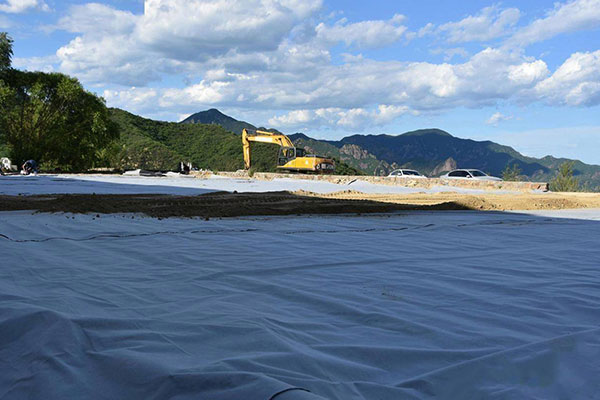
How Much Does Geomembrane Installation Cost?
Material price and installed price are not the same thing.
A complete geomembrane installation may include:
- Ground preparation
- Geotextile underlay
- Geomembrane placement
- Thermal welding
- Seam testing
- Anchor trenches
- Quality inspection
- Labor and equipment
Installation costs vary significantly between countries and projects. Project size, slope conditions, site accessibility, welding complexity, and local labor rates all affect the final figure.
For this reason, a geomembrane costing $1.50/m² at the factory does not mean the finished lining system will cost only $1.50/m².
How to Calculate Your Geomembrane Cost
A simple material estimate can be calculated as:
Required Area × Geomembrane Price per m² = Material Cost
For example, suppose your project requires 10,000 m² of 1.5 mm HDPE geomembrane and the material price is $2.00/m²:
10,000 × $2.00 = $20,000
But you should not order exactly 10,000 m².
Additional material is normally required for:
- Welding overlaps
- Anchor trenches
- Irregular shapes
- Cutting losses
- Site adjustments
Therefore, the actual order quantity may need to be slightly higher than the measured lining area.
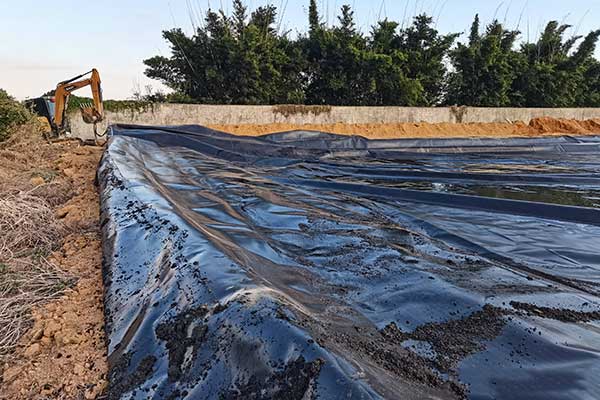
How Can You Reduce Geomembrane Costs?
The easiest way to control costs is not simply to choose the thinnest liner.
Instead, start by choosing the correct specification.
For example, using a 2.0 mm liner where a properly designed 1.0 mm liner would meet all engineering requirements increases material and freight costs unnecessarily.
You can also reduce costs by:
- Purchasing directly from a manufacturer
- Ordering larger quantities at one time
- Optimizing roll dimensions
- Choosing the appropriate thickness
- Combining geomembrane and geotextile orders
- Planning shipping in advance
The goal should be to achieve the required performance at a reasonable total project cost.
Is HDPE Geomembrane Expensive?
Compared with many traditional containment systems, HDPE geomembrane can be a cost-effective solution, particularly for large areas.
It provides a continuous low-permeability barrier while being relatively fast to transport and install. This makes it widely used for:
- Landfill liners
- Pond liners
- Water reservoirs
- Wastewater treatment
- Mining facilities
- Tailings ponds
- Irrigation projects
- Biogas projects
The initial material price is only one part of the decision. Durability, installation quality, chemical resistance, and expected service life should also be considered.
How to Get an Accurate Geomembrane Price
Because geomembrane prices depend heavily on specifications, suppliers normally need several details before providing an accurate quotation.
You should provide:
- Geomembrane material
- Required thickness
- Smooth or textured surface
- Required quantity
- Roll dimensions
- Project application
- Technical standard
- Delivery destination
Providing this information from the beginning makes it much easier to compare quotations accurately.
Conclusion
Now you have a clearer idea of how much a geomembrane costs. Standard HDPE geomembrane material typically ranges from around $0.50 to $3.50 per square meter, although thicker, textured, or special-purpose products can cost more.
Instead of focusing only on the lowest price per square meter, consider thickness, material quality, installation requirements, shipping, and the expected service life of the liner. Choosing the right geomembrane specification can help you control project costs while still providing reliable long-term containment.