

Scissor Lift Buying Guide: How to Choose
When your business requires safe, efficient, and stable elevated work, a scissor lift is one of the most reliable solutions. But choosing the right model can be confusing—there are dozens of lifting heights, power types, platform sizes, and design variations.
This scissor lift buying guide will walk you through the key factors you must evaluate before making your purchase. Whether you’re buying for construction, warehouse operations, facility maintenance, or industrial installations, this guide will help you pick the best lift for your needs.

What is a Scissor Lift?
A scissor lift is a type of aerial work platform (AWP) that raises workers vertically using a crisscross (scissor-shaped) lifting mechanism. It provides a stable platform to work safely at height and is widely used in construction, warehousing, maintenance, and indoor installation tasks.
1. Determine the Required Working Height
The most important specification is working height, which is typically 6–7 feet (2 meters) higher than the platform height.
Common Scissor Lift Height Ranges
| Platform Height | Working Height | Typical Use |
|---|---|---|
| 6–8 m (19–26 ft) | 8–10 m | Indoor maintenance, shopping malls, warehouses |
| 10–12 m (32–40 ft) | 12–14 m | Construction finishing, facility repair |
| 14–18 m (45–60 ft) | 16–20 m | Outdoor construction, signage installation |
2. Choose Between Electric and Diesel Scissor Lifts
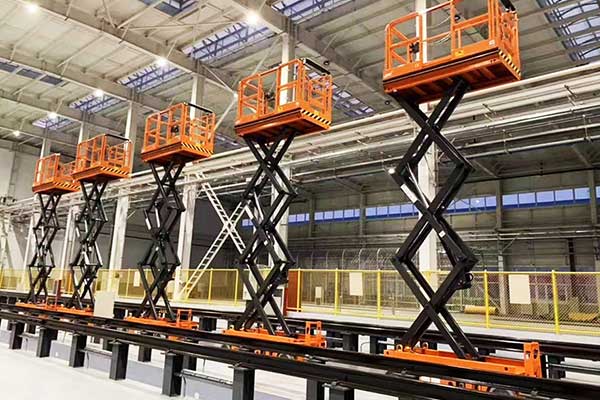
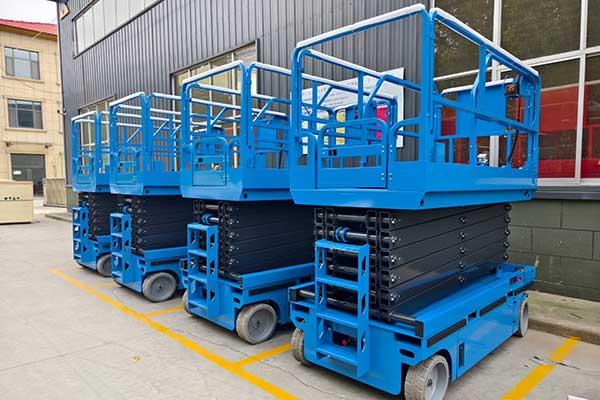
Electric Scissor Lifts
Best for indoor use.
- Zero emissions
- Low noise
- Compact size
- Smooth operation
- Often equipped with non-marking tires
Ideal for: warehouses, factories, airports, shopping centers.
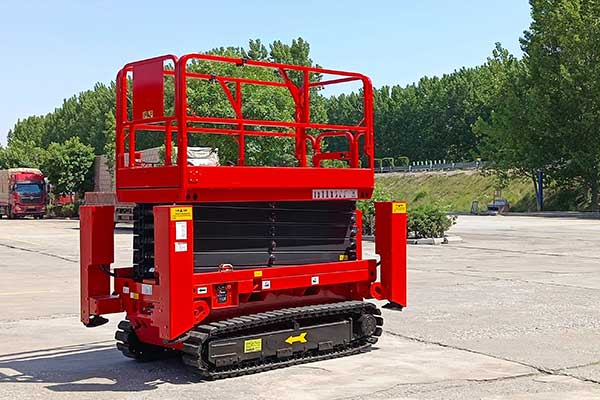
Diesel Scissor Lifts
Designed for outdoor work.
- High power
- Larger platform sizes
- Higher load capacities
- Excellent rough-terrain performance
Ideal for: construction sites, road maintenance, outdoor installation.
3. Consider the Load Capacity
Load capacity determines how many workers, tools, and materials can be safely carried.
Typical Load Capacities
- Light-duty: 230–320 kg
- Medium-duty: 400–700 kg
- Heavy-duty (RT scissor lifts): 900–1500 kg
If your job involves heavy tools or multiple workers, choose a higher-capacity model.
4. Platform Size and Extension Deck
A larger platform increases productivity when multiple workers or bulky tools are needed.
Why Platform Extension Matters
An extending deck provides additional horizontal reach, allowing workers to access hard-to-reach areas without repositioning the lift.
Choose a platform with:
- Wide working area
- Slip-resistant flooring
- Guardrails meeting safety standards
5. Terrain Type and Mobility Requirements
Indoor, Smooth Flooring
- Choose compact electric scissor lifts
- Must have non-marking tires
Outdoor or Uneven Ground
- Diesel or hybrid rough-terrain (RT) scissor lifts
Features to look for:
- 4×4 drive
- Outriggers/stabilizers
- Solid or foam-filled tires
- Higher ground clearance
Understanding your work environment ensures the lift is safe and stable.
6. Safety Features You Should Look For
Safety is everything when working at height. A good scissor lift should include:
- Emergency stop button
- Descent alarm
- Tilt protection system
- Overload sensor
- Automatic pothole protection
- Non-slip platform
- Guardrails that comply with ANSI/CE/ISO standards
Never compromise on safety for price.
7. Maintenance and After-Sales Support
Before buying, ensure the supplier provides:
- Spare parts availability
- Technical support
- Maintenance manuals
- Training for operators
- Warranty coverage
A reliable dealer will reduce downtime and improve equipment life.
8. New vs. Used Scissor Lift: Which Should You Buy?
Buy New If You Need:
- High reliability
- Long service life
- Latest technology
- Strong warranty
Buy Used If You Want:
- Lower upfront cost
- Occasional/light-duty usage
Ensure the used machine has verified maintenance records and undergoes a professional inspection.
9. Budget Planning
Factors affecting scissor lift price include:
- Lifting height
- Power type (electric vs diesel)
- Load capacity
- Brand and components
- Safety certifications
Don’t choose solely based on price—choose based on cost-performance, durability, and support.
Conclusion
Selecting the right scissor lift ensures safer, faster, and more efficient work—whether you operate in construction, warehousing, facility maintenance, or retail environments.
Ready to Choose the Right Scissor Lift?
If you’re looking for a reliable, high-performance scissor lift that meets global safety standards, Roadsky is your trusted partner. With years of experience in highway equipment and lifting solutions, Roadsky provides durable, efficient, and cost-effective scissor lifts for construction, maintenance, warehousing, and industrial applications.
Contact Roadsky for a free quote and professional consultation!